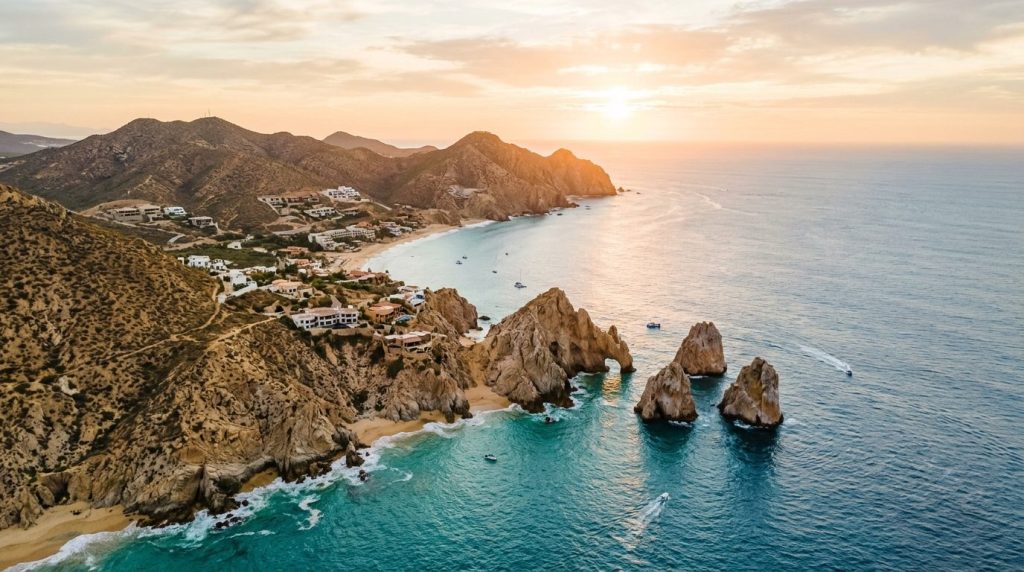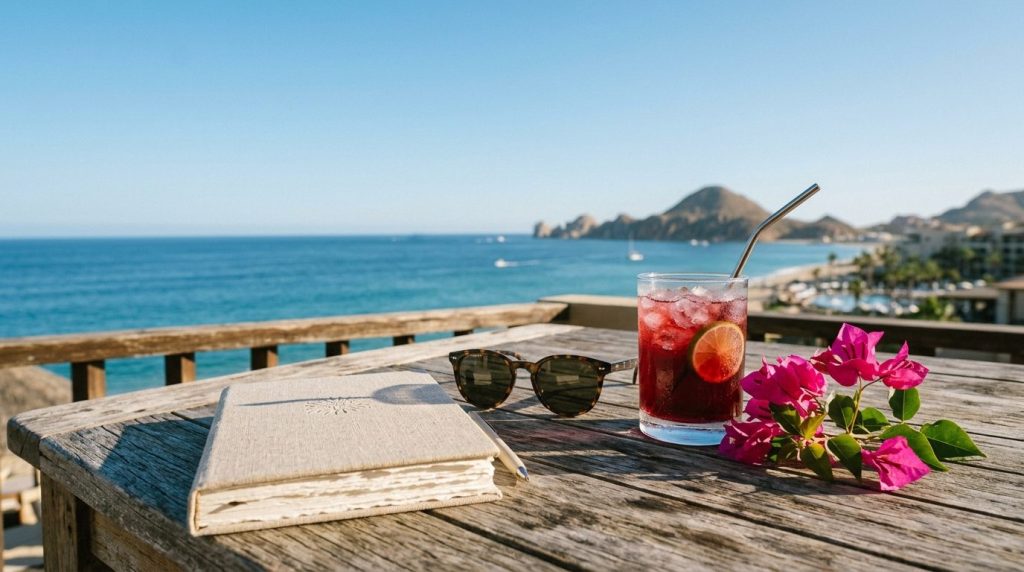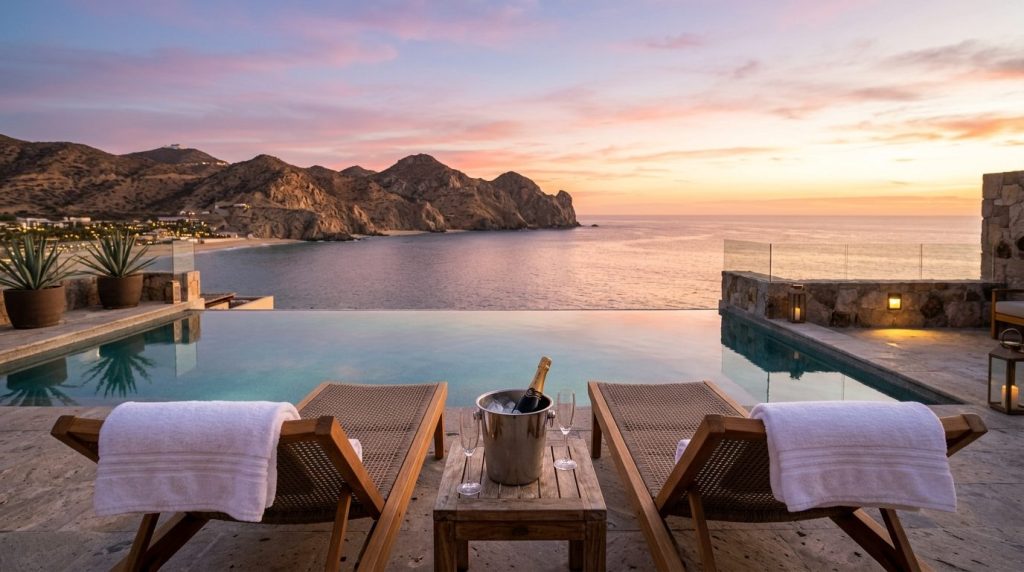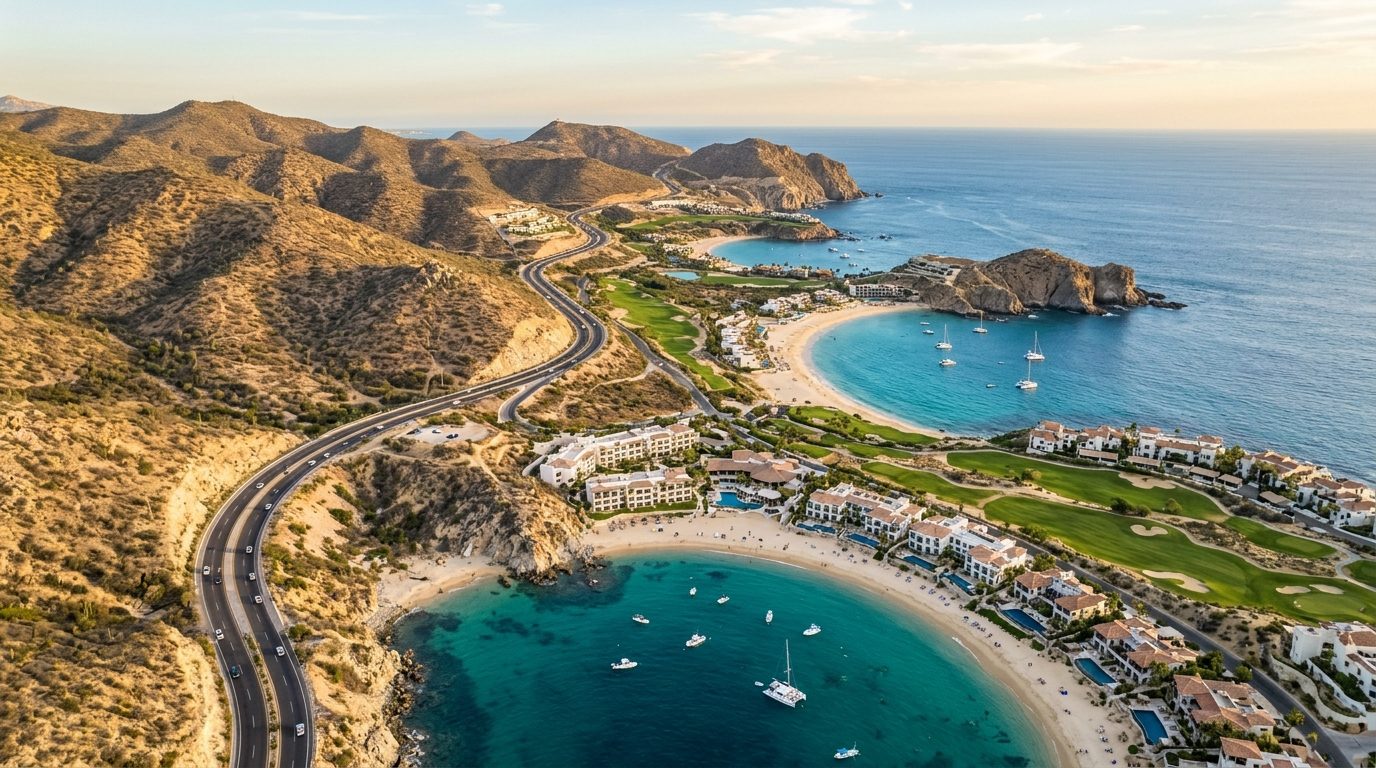
The Los Cabos Tourist Corridor is the stretch of coast between Cabo San Lucas and San José del Cabo, linked by a four-lane highway about 33 kilometres long. It holds most of the destination’s leading resorts, golf courses and private communities, and its sheltered Sea of Cortez bays include several Blue Flag beaches, which is why it is the most coveted address in the region for visitors and buyers alike.
Understand how the Corridor works, and everything else in Los Cabos becomes easier to plan, from where to sleep and where to dine to where to look at homes.
How the Corridor works
The Corridor follows the Carretera Transpeninsular, Highway 1, along the southern edge of the Baja peninsula. Addresses are given as kilometre markers, so you will see a resort described as being at Km 17 or Km 19.5. The numbers run from the Cabo San Lucas end towards San José del Cabo.
That simple system tells you a lot. A low number puts you close to the marina, the Arch and the energy of Cabo San Lucas. A high number puts you near San José’s galleries, the farm restaurants of the foothills and the airport. The middle gives you both within a reasonable drive.
The Cabo 100 take: read the kilometre marker before you read the room rates. A hotel at Km 19.5 and a dinner reservation at Km 6 are a real drive apart at the evening rush, so plan the dinners that matter on your own end of the Corridor and hire a driver for the rest.
A short history
The Corridor’s luxury story begins with Palmilla, which opened in 1956 as a remote hideaway that drew Hollywood names. For decades the coast between the two towns was largely empty. Golf changed that. Jack Nicklaus’ oceanfront course at Cabo del Sol, now the private Cove Club, opened in 1994, and Las Ventanas al Paraíso followed in 1997.
Today the tourism board counts eight golf courses on the Corridor, by designers including Nicklaus, Tom Fazio, Tom Weiskopf and Robert Trent Jones Jr., alongside resorts that range from boutique hideaways to all-inclusives. The growth has not stopped: Ánima Village, the open-air luxury retail village at Cabo del Sol, opened its first phase in December 2025, and a first Soho House for Los Cabos is expected at Cabo del Sol later this year.
The Cabo San Lucas end
The first few kilometres out of Cabo San Lucas hold some of the most dramatic positions on the coast. The Cape, a Thompson Hotel, sits at about Km 5.5 with a direct view of the Arch and houses Enrique Olvera’s restaurant Manta. Sunset Monalisa steps down the cliffs at Km 6. Nearby, Esperanza occupies the clifftop point at Punta Ballena between two coves.
Further along, Cabo del Sol is an 1,800-acre community with the Four Seasons, Nicklaus and Weiskopf golf, and Ánima Village. This end suits travellers who want to reach the marina for dinner in minutes but sleep somewhere quiet, in clifftop resorts that face the sea rather than the town.
The heart of the Corridor
The middle stretch is where the protected bays are found. Chileno Bay and Santa María Bay are both listed by the tourism board among the Blue Flag beaches, with calm water in their sheltered coves. Around them sit some of the most private addresses in the region.
- Chileno Bay is a private club community with a Tom Fazio course, a members’ beach club and the Auberge resort.
- Maravilla is an intimate club community on Santa María Bay with golf by Fred Couples.
- Twin Dolphin, beside Montage Los Cabos, is a 1,400-acre community built around a Couples-designed course high above the sea.
Grand Velas, home to the destination’s only Michelin-starred restaurant, sits at about Km 17, and Las Ventanas at Km 19.5. Cabo Real, with resorts such as Solaz, also falls in this central section.
The San José end
Closer to San José del Cabo, the Corridor becomes the domain of Palmilla, where gated neighbourhoods surround One&Only Palmilla and its golf club, and Palmilla Beach is another Blue Flag bay. The Nicklaus golf club is now in a multi-year renovation, with work on its nines scheduled to run through 2027 and 2028, so check which holes are open before you plan a round. Querencia, set on about 840 acres between Palmilla and Costa Azul, is one of the most private golf communities in the region, and its second Tom Fazio course is due to open to members in November.
El Merkado, at about Km 24.5, gathers several of the most talked-about restaurants, including the mesquite-fired Carbón Cabrón and the Mediterranean-style Nao. The surf beach at Costa Azul, also known as Acapulquito, marks the edge of town.
Dining along the Corridor, by kilometre
Many of the best tables in Los Cabos sit on the Corridor itself, and the kilometre markers make it easy to plan a dinner close to where you sleep.
- Km 5.5, The Cape: Manta for Enrique Olvera’s seafood-led cooking with the Arch in view, then the hotel’s rooftop bar for a nightcap.
- Km 6, Sunset Monalisa: modern Italian on cliffside terraces, with a first seating timed to the sunset.
- Km 15, Chileno Bay: Comal, with its raw bar and tables above the bay.
- Km 17, Grand Velas: Cocina de Autor, the destination’s only Michelin-starred tasting menu.
- Km 19.5, Las Ventanas: Árbol for Indian and pan-Asian cooking, then La Botica, the apothecary-style speakeasy.
- Km 24.5, El Merkado: Carbón Cabrón for mesquite-fired cooking and Nao for Mediterranean plates.
Pair your hotel with the two or three dinners nearest to it, and save the long drive for the one reservation that justifies it.
What to know before you choose
- Not every beach is for swimming. The protected bays are the exception rather than the rule. Check the flags and ask your resort before entering the water anywhere.
- Golf access varies. Several Corridor courses are private, while others take resort guests or public tee times.
- The weather is a factor. Hurricane Odile made landfall on the Corridor in 2014, and the eastern Pacific season runs from mid-May to the end of November. Construction standards and insurance matter for owners.
- Transport is easy. The highway is fast, but a private driver is still the best way to dine at the other end.
Owning on the Corridor
For buyers, the Corridor offers the widest choice in Los Cabos: resort residences with full hotel services, condominiums inside golf communities and estate homes above private bays. Each community sets its own rules on rentals, fees and guest access, and those rules often matter more than the view when you come to live with them.
Coastal property in Mexico is typically held through a bank trust known as a fideicomiso. A local notary and an experienced lawyer should be part of any purchase, and an accountant can explain the tax side for your situation.
If a stay on the Corridor has you thinking about a place of your own, begin with our guide to owning in Cabo. Explore homes in Palmilla or Cabo del Sol, or browse current listings at Luxury Los Cabos.